


NON-TRADITIONAL ARTS
DANCE
Celebration of an event
PRECOLONIAL
PERIOD•
The IDAW dance of the Cordillera region was performed by the Igorots that depicts the hunting ritual before the tribal war. The Idaw was coined from a bird which the tribesmen would watch and look for a scared bird which is said to lead the tribe to a victory.

Reference: PHILIPPINE FOLK DANCE (wordpress.com)
Reference: Dugso – lppach (wordpress.com)
Dance that imitates the animal
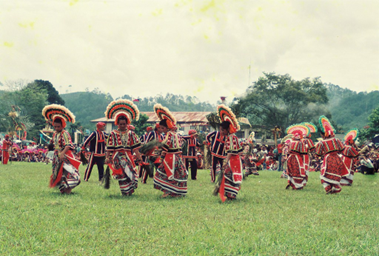
The DUGSO dance was a dance originated from Bukidnon province, which typically performed during the feasting or kaliga, as thanksgiving of a favor. The center of the space where the dance will be performed is lit with a fire. Around the fire, dancers perform. It is thought that the smoke from the fire will carry their thanksgiving offering to their "Gods." The dancers round the fire and their priest, who stands next to it. They say their prayers out loud while singing.
PRECOLONIAL
PERIOD•
Reference: Filipino Songs Atbp: Tarektek-Mountain-Igorot Dance

Reference: Kadal Tahu History and Background - KADAL TAHU SUBMITTED TO: SIR. RONN LESTER CANUSTRA SUBMITTED BY: - Studocu

Reference: Lumad (Indigenous) - Kababayang Pilipino
PRECOLONIAL
PERIOD•
PRECOLONIAL
PERIOD•
PRECOLONIAL
PERIOD•
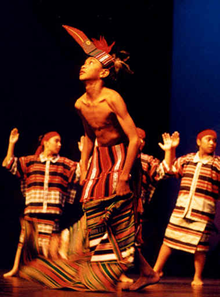
The TAREKTEK dance came from Mt. Data in Benguet, home of tarektek, or woodpeckers. The tarektek dance originated with these untamed and vibrant birds. In this dance, two tarektek guys compete for the attention of three tarektek ladies by deftly manipulating a vibrant tribal blanket that symbolizes the birds' dazzling feathers and playfully beating on a brass gangsa that represents spectacular bird cries.
The BINAYLAN BANOG dance was from the Higaonon and Agusanon Manobo tribal dance referred to as Binaylan Banog shows the movements of a hen, her “banog”, or tiny chicks, and a hawk that waits to discover its victim. The tribe eliminates the formidable and revered hawk that attempted to seize one of the young birds.
The KADAL TAHO dance began in Lake Sebu, South Cotabato. The T'boli dance this dance, which depicts the tahaw bird's flights and hops, during planting and harvesting. It is also regarded as the authentic T'boli dance. When planting and harvesting season arrives, they dance in a way that symbolizes the hopping and flight of the bird. The T'boli tribe inhabits an area teeming with abundant fauna, particularly birds.
Dance that tells a story
The SALIP dance is a courtship dance from Kalinga. When a man and a woman are planning to be married, this dance is typically performed by them. In these matters the man will only know if the woman accepts his courtship when she takes the blanket from him.

Reference: Pre Colonial Dances in the Philippines by Iya Laurel (prezi.com)
The SINGKIL dance derived from the Maranao people that live along Lake Lanao's shoreline. It is based on a tale found in the Darangen, the Maranao translation of the Ramayana, an old Indian epic. "To entangle the feet with disturbing objects such as vines or anything in your path" is how the dance is named. It is a well-liked dance that is done at parties and other celebratory events.

Reference: SINGKIL - PHILIPPINE FOLK DANCES (weebly.com)
Dance that shows everyday life
KAPPA MALONG MALONG dance from the Maranao is a dance that showcases the various ways to style a "malong," a basic tubular yet incredibly useful piece of clothing. The malong is a traditional "tube skirt" with a variety of geometric or "okir" (a name for geometric and flowing motifs) designs woven into multicolored cotton material by hand, or occasionally by machine.

Reference: BANGA: A BALANCING ACT – MAAARI
The BANGA dance from Kalinga is a dance that narrates the tale of the grace, tenacity, and power of Filipino women. The word "pot," or "banga," refers to an earthen container that originated in the Philippines' northern Cordillera. Traditionally, they are constructed from native clay that is only found in the Kalinga communities, which are dotted with verdant mountainsides and rice terraces.

Reference: Kappa Malong-Malong | Tradional Dances (wordpress.com)
Dance for worship
The MANERWAP dance from Bontoc, it is described as a rain dance to the god "Kabunian," opening the heavens and bringing rainfall to irrigate the rice terraces.

JOTA
SPANISH COLONIAL
PERIOD•
SPANISH COLONIAL
PERIOD•
The JOTA dance is a popular dance performed in a fast triple time during the Spanish period, was first played at social gatherings by the Spanish, together with the polka, valse, and habanera. The dance gained popularity, perhaps as a result of its cheerful and upbeat pace and the accompanying nimble motions. The dance quickly became popular, initially among the wealthy and then in rural areas.

BALSE
The BALSE dance is a dance that originated with the Southern German dance known as the peasant landler. It had grown widespread throughout Europe and is one of the principal dances in many nations, including Spain, during social festivities. The balse was well-liked in the Philippines by the 1800s.

PANDANGGO SA ILAW
The PANDANGGO SA ILAW dance was another popular dance among the Filipinos during the Spanish colonial time. The fandango (pandanggo in Filipino) is a vivacious dance performed to a slow-to-quick beat in Spain. The movements from the original fandango were adapted into the native dances with exceptional flexibility, creating a gentle yet energetic dance. It is typically done for fun and celebration, with dancers using tambourines or castanets to maintain time.

HABANERA
The HABANERA dance was named for the Cuban city of Havana—was introduced. It is a slow duple meter dance that follows a step-close-step rhythm, akin to the tango. The original dance's characteristics were incorporated by the Filipinos into their own rendition. The areas of Pangasinan and Ilocos are the origin of most habanera dances.

CURACHA
1898-1946. During the American period, Western influences were introduced to Philippine dance. This included ballroom dances like the waltz, tango, and foxtrot, which were incorporated into local celebrations and performances.
A lively dance from the Visayas region, often performed at weddings and social gatherings. It incorporates elements of the waltz and polka, making it a fun and energetic dance.
AMERICAN COLONIAL
PERIOD
JAPANESE COLONIAL
PERIOD

Rigodon de Honor
A formal dance originating from Spain, adapted by Filipinos during the American period. It is characterized by elegant costumes and precise footwork, often performed at balls and special occasions

TINIKLING
1942-1945. The Japanese occupation of the Philippines during World War II had a significant impact on the country's culture, including dance. Japanese dances like the Obon and the Sakura were introduced, and some traditional Filipino dances were adapted to incorporate Japanese elements. A traditional Filipino dance where dancers step and hop over bamboo poles, mimicking the movements of the 'tikling' bird. During the Japanese occupation, some versions of the dance incorporated Japanese music and costumes.

SINGKIL
Another traditional Filipino dance requiring great skill and coordination. It involves dancers manipulating bamboo poles that clack together rhythmically as they move around them. During the Japanese period, some versions incorporated Japanese drumming and chanting.

BALLET
CONTEMPORARY
PERIOD
1946-present. After independence, Philippine dance experienced a period of revival and innovation. Traditional dances were reinterpreted and modernized, while new forms of dance emerged, influenced by contemporary trends from around the world. Founded in 1969, Ballet Philippines is a renowned dance company known for its innovative productions that combine classical ballet with traditional Filipino influences.
Street Dance
Hip-hop and other street dance styles have become popular in the Philippines, often incorporating Filipino rhythms and movements into their performances.


MUSIC
The music of the Philippines (Filipino: Musika ng Filipinas) includes the musical performance arts in the Philippines and the music of Filipinos composed in various local and international genres and styles. Philippine musical compositions are often a mixture of indigenous styles, and various Asian styles, as well as Spanish/Latin American and (US) American influences through foreign rule from those countries.
SPANISH COLONIAL
PERIOD•
Music developed during this period is one of the roots for modern Filipino music.

A Historical Review Of Pre-Colonial Music In Philippines
It was during this period that guitars became popular.
The three main forms introduced to the Filipinos were the Harana, the Kundiman, and the Rondalla.
Most of these forms were developed as a result of the fusion between tribal music styles and traditional Spanish and Mexican music.
HARANA

The Harana is practiced in small towns and rural places. This is how the men court the women from before. A man accompanied by his friends would visit a woman and sing to her love songs to make her fall in love with him. The man is usually accompanied by his friends to give him moral support and also help him with the songs he will use to serenade the woman. Harana is also called “Habanera Filipina”. This is so because its rhythmic element came from the Spanish Tango or Habanera.


Rondalla is an ensemble of instruments. Philippine rondallas consists of piccolo bandurria, bandurria, and la-ud, and the guitar-shaped octavina and mandola, guitara, and double bass. and is used to accompany several Hispanic-influenced song forms and dances.
RONDALLA

SPANISH COLONIAL
PERIOD•
The American regime lasted from 1898 to 1946 during which time Philippine music underwent another process of transformation.In the newly established public school system, music was included in the curriculum at the elementary and later at the high school levels. Music conservatories and colleges were established at the tertiary level. Graduates from these institutions included the first generation of Filipino composers whose works were written in western idioms and forms. Their works and those of the succeeding generations of Filipino composers represent the classical art music tradition which continues to flourish today.
AMERICAN COLONIAL
PERIOD


Side by side with this classical art music tradition was a lighter type of music. This semi-classical repertoire includes stylized folk songs, theater music, and instrumental music. The sarswela tradition produced a large body of music consisting of songs patterned after opera arias of the day as well as short instrumental overtures and interludes. The strong band tradition in the Philippines, which began during the previous Spanish period and which continues to this day, produced outstanding musicians, composers and performers. Another popular instrumental ensemble was the rondalla which superceded an earlier type of ensemble called the cumparsa. The latter was an adaptation of similar instrumental groups, the murza of Mexico and the estudiantina of Spain. American lifestyle and pop culture gave rise to music created by Filipinos using western pop forms. Referred to as Pinoy pop it includes a wide range of forms: folk songs, dance tunes, ballads, Broadway type songs, rock’ n’ roll, disco, jazz, and rap.

JAPANESE
COLONIAL
PERIOD
Under their rule, the Japanese imposed their own music on the country. Japanese music was heard daily in radio broadcasts. Their songs were also taught in public schools. Students, however, never took these songs to heart.
The performance of jazz and Western music identified with the allied nations of the war was prohibited. Hence, the Japanese held conferences and lectures on Oriental music in Manila with the hope of diverting the loyalty of the Filipinos away from the Americans. The first was a Japanese Musical Mission to the Philippines held on May 7, 1943, with the support of the New Philippine Musical Federation headed by Kosak Yamada.

The Japanese nevertheless encouraged the creation and performance of music with native themes through music contests. Concerts were also a common form of amusement for Filipinos at the time and the Metropolitan Theater became an important venue for cultural events.
Classical music, including opera, flourished during the war. For instance, the New Philippine Symphony, the first all-Filipino orchestra, was organized. It performed an all-Philippine symphonic program in July 1942, with Francisco Santiago as conductor. The Philippine Conservatory of Music, an affiliate of the Philippine Women’s University, was one of the few music schools in the country that opened during the war.
Folk songs during Pre-Colonial period in the Philippines
PRECOLONIAL
PERIOD
SELECTED FILIPINO FOLK SONGS
SYLVIA LA TORRE - CARINOSA
Tagalog Kundiman - Pilita Corales Songs
Tribal sounds of the Philippines
• T'BOLI
Bamboo & Drums , Philippine music - Tboli tribe ( lemuhen)
GOT Opening Theme Cover | Kontra-GaPi
POST WAR /CONTEMPORARY
PERIOD
After independence in 1946, Philippine music showed a marked growth in cultural consciousness and nationalism. Music schools increased from the pre-war 12 to 33, offering Bachelor of Music courses in piano, voice, strings and wind instruments, music theory, composition and music education. Some schools offer course for the Master of Music degree. The League of Filipino Composers was established in 1955 with 11 charter members. Filipino composers continued writing major works using western idioms with conventional traditions utilizing folk themes and legends. The concerto, symphony, symphonic poem, overture, suite, opera, choral, chamber, art song, ballet and incidental music were written during this period. Contemporary composers utilized percussive dissonance, polyrhythm, atonality, music concrete, electronic music, synthesis of East/West in fresher modes, producing works of distinct cultural personality.

Cumbancheros or combos, makes the rondalla popular
The ethnomusicologist/composer Jose Maceda whose exposure to Asian music and Filipino tribal music has produced an embodiment of his advanced thinking combining sounds with 20th century techniques in his avant-garde compositions.
Pioneering on the synthesis of East/West idioms, this writer has utilized ethnic Filipino/Asian instruments in her works. The younger group of composers led by Ramon P. Santos and Francisco P. Feliciano and followers like Ruben Federizon have pursued Asian environmental orientation, producing avant-garde works like Santos’ Singaw for jew’s harp, takumbo, gongs, violin, and Tinig for voices and percussions; Federizon’s Gabag-an for voices and ethnic instruments, and Tinig ng Lupa (Song of the Earth). – Dr. Lucresia R. Kasilar

Modern instruments
THEATER
Philippine Theatre has a rich and diverse history that spans from the pre-colonial period to contemporary times. Each era has contributed to the development and evolution of Philippine theatrical arts. Here is an overview of Philippine Theatre across different periods:
PRECOLONIAL
PERIOD
Rituals and Ceremonies
The pre-colonial Philippines had a rich tradition of rituals and ceremonies that often involved performances.
Examples include the "Hudhud" and "Alim" epics of the Ifugao people, which were chanted during rituals.

Hudhud
The Hudhud consists of narrative chants traditionally performed by the Ifugao community, which is well known for its rice terraces extending over the highlands of the northern island of the Philippine archipelago. It is practised during the rice sowing season, at harvest time and at funeral wakes and rituals.
SPANISH COLONIAL
PERIOD
AMERICAN COLONIAL
PERIOD•
Zarzuela
Introduced by the Spaniards, zarzuela is a form of musical drama that became popular in the Philippines. "Walang Sugat" by Severino Reyes is a notable example from this period.
Walang Sugat by Severino Reyes
The Tagalog-language zarzuela “Walang Sugat,” which was written in 1898 by Severino Reyes, the Father of Tagalog Plays and Zarzuela and more popularly known for his pen name “Lola Basyang,” was first staged in 1902 at Teatro Libertad. In this production of the timeless classic zarzuela, the story of forbidden love amid the 1896 Philippine Revolutionary movement against the Spaniards was beautifully portrayed by soprano Cris Villonco who played the character of “Julia,” and the tenor Noel Rayos who played the role of “Temyong.”

Moriones Festival
Although this originated in the Spanish era, the Moriones Festival in Marinduque involves theatrical performances depicting the story of Longinus, a Roman centurion.This tradition is observed by men, and now, even by some women during the Holy Week starting from Holy Monday to Easter Sunday.The penitents wear masks and costumes similar to those worn by the Roman soldiers as a way of atonement for their sins committed or for other similar reasons. The penitents roam around the town for the day throughout the week wearing masks and glamorously designed costumes.

J A P A N E S E C O L O N I A L P E R I O D
Resistance Plays
1942-1945. During World War II, Filipinos engaged in resistance plays to boost morale and convey anti-Japanese sentiments. "Tanikalang Ginto" by Juan Abad is an example of a play written during this period.
SPANISH COLONIAL
PERIOD
Tanikalang Ginto by Juan Abad
Tanikalang Guinto showcases themes of nationalism, and love for independence and culture. The story is about freedom and love. Juan Abad made the characters symbolized nationalism. He wrote the story in nationalistic way of expressing how we were during American Colonization and how we wanted freedom for the country.

POST WAR T O CONTEMPORARY
PERIOD
A Portrait of an Artist as Filipino by Lamberto Avellana
Experimental and Political Theatre:
The 1986 People Power Revolution led to a more open atmosphere for artistic expression Works by playwrights like Floy Quintos ("The Kundiman Party") and Rody Vera ("Dolorosa") explore societal issues.

Cinematic and Televised Theatre
Theatre arts expanded to include film and television productions. Cinemalaya, a film festival that showcases independent films, has been influential in promoting Filipino cinema.
Performance Art and New Media
Contemporary artists explore performance art and incorporate new media into their works.Examples include the works of Eisa Jocson, who explores gender and identity in her performances.
Philippine Educational Theatre Association (PETA)
PETA has been instrumental in promoting socially relevant and community-based theatre.Their productions, such as "Ang Buhay Ni Galileo" and "Rak of Aegis," showcase a fusion of entertainment and social commentary.
Regional Theatre
Regional theatre scenes have flourished, with groups like Tanghalang Pilipino in Manila and Mindanao-based groups contributing to the diversity of Philippine theatre.
This overview provides a glimpse into the rich tapestry of Philippine Theatre, which has evolved over the centuries, reflecting the country's history, culture, and social dynamics.


